Grid Reliability Is How a Nation Keeps Its Promises
Industry · 2026-07-13
By Joshua Miller, President
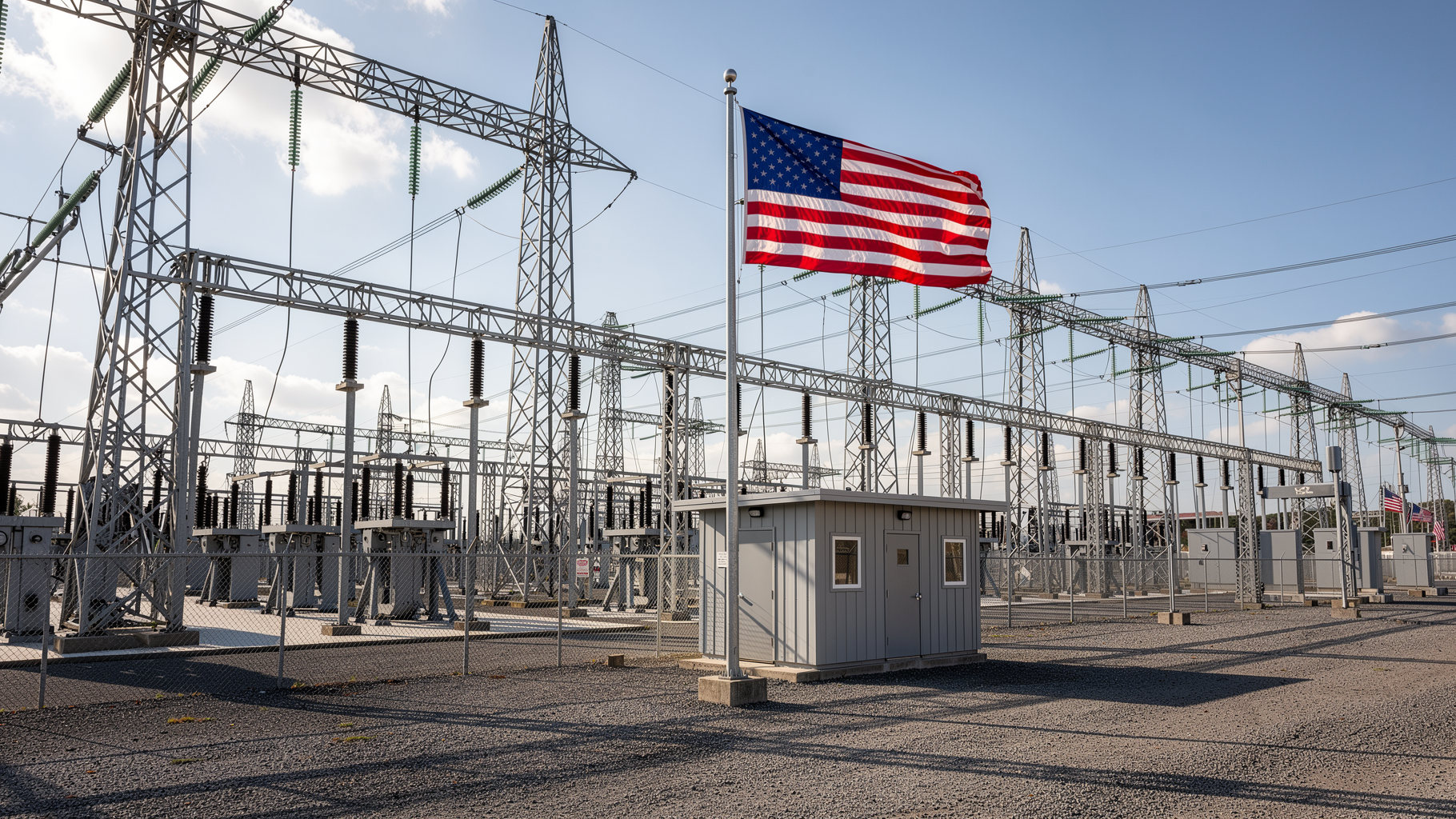
The failure mode is famous. The success mode is silence.
This month, America turned 250. Most of the celebration focused on the ideals, and it should. A nation is founded on ideals. But it is sustained by infrastructure. For 250 years, Americans have built the physical things that make the promise real: the rails, the roads, and the power system that carries this country's work every hour of every day.
Our company works on one piece of that system: the substations, protection systems, and commissioning programs that keep electricity moving from generation to the people who depend on it. Grid reliability is our whole business. After a holiday spent thinking about what 250 years of building actually means, I want to make the case for the part of the grid nobody sees: the people and the discipline behind it.
Ideals Don't Carry Load
The Fourth of July is a good test case for how the grid works. Demand spikes in the evening heat. Neighborhoods fill with people home from work. Stadiums, concerts, and fireworks shows all draw power at once. The expectation is absolute and unquestioned. The lights stay on, the show goes off, and nobody thinks about electricity at all.
That expectation is the point. Reliability, done right, is invisible. When a protection scheme operates correctly, when a substation energizes without incident, and when a relay trips within the cycles it was designed to trip, nothing happens that anyone notices. The failure mode is famous. The success mode is silence.
That means the people who deliver that silence rarely get thanked. Some of our crews were on shift on the Fourth, working the holiday so everyone else did not have to. That is not unusual. Utilities staff holidays every year, and so do the contractors who support them. It is not glamorous work. But the people who do it carry the responsibility with pride, every shift, every project, and every day of the year.
What Grid Reliability Actually Requires
The hard truth about grid reliability is that it is not produced in the moment. By the time a summer peak arrives, the outcome is already decided. It was decided months earlier through protection design reviews, relay settings that were verified instead of assumed, commissioning tests that had a number behind every result, and documentation that lets the next crew understand what the last crew did.
Reliability is built in layers, and every layer is unglamorous.
Protection That Operates When It Should
Protection that operates when it should, and only when it should.
Relay misoperations are a leading contributor to disturbance events on the bulk power system. Getting protection right means testing relay settings against the actual system, verifying scheme logic from end to end, and questioning results that do not match expectations. Testing to the drawings is not enough when the drawings are wrong.
Commissioning that proves readiness instead of assuming it.
A substation is not ready because the schedule says it is ready. It is ready when functional testing, interlocking checks, relay-to-relay coordination, and SCADA point verification have all been completed and documented. The results must be traceable enough that an engineer five years from now can reconstruct what was tested and why.
Telex performs this work in accordance with recognized industry testing standards, including ANSI/NETA ATS where appropriate.
People Trained to a Standard
Test equipment does not make judgment calls. Technicians do. The difference between a crew that catches a wiring error before energization and a crew that finds it during an event is training, preparation, and the discipline to stop when something does not look right.
None of this shows up in a ribbon-cutting photo. All of it determines whether the grid holds.
Who Keeps the Power Grid Running?
The honest answer is tens of thousands of people most Americans will never meet: utility operators, line crews, substation electricians, relay technicians, protection engineers, and dispatchers. Some work for investor-owned utilities, some for municipal utilities and cooperatives, and some for contractors like us. On any given holiday, a portion of them are in a control room or a substation yard instead of at a barbecue.
At Telex, we deploy field personnel in union and non-union environments depending on jurisdiction and project requirements, and every one of them is held to the same internal standard. We also run a U.S. Department of Labor-registered apprenticeship program for relay technicians because the workforce that built the last century of the grid is retiring faster than the industry is replacing it. The only durable answer is to train the next generation deliberately.
That workforce question matters more than most reliability conversations acknowledge. You can fund a capital program, but you cannot buy a relay technician with fifteen years of judgment. You have to build one over a period of years through structured training, real field experience, and mentorship from people who have seen what happens when preparation gets skipped.
The Next 250 Years Will Be Harder on the Grid Than the Last 250
The grid America celebrates at 250 was built for a different country. Load growth from data centers and electrification, renewable generation reshaping how power flows, aging substation equipment operating past its design life, and grid-hardening demands caused by more severe weather are all arriving at once. All of it lands on the same infrastructure and the same limited workforce.
That means more new substations, more upgrades to existing ones, more protection systems to design and verify, and more energizations where the schedule pressure is real and the tolerance for error is not. Every one of those projects will come down to disciplined preparation, honest documentation, protection that has been proven rather than presumed, and crews with the judgment to surface problems early, when they are inexpensive to fix, rather than at startup, when they are not. Those fundamentals have always governed this work.
The grid does not forgive shortcuts. It never has. The utilities that navigate the next few decades well will be the ones that treat reliability as an engineering discipline, one that is designed, tested, documented, and staffed, rather than an outcome they simply hope for.
This is my belated holiday message, expanded beyond what fits in a social media post. To the crews who worked the Fourth, both ours and everyone else's, thank you. You are the reason the lights stayed on and everyone else got to be with family.
To the utility engineers, project managers, and operations leaders planning the next substation, the next protection upgrade, or the next energization: the work you are scoping right now is the reliability the country will take for granted in five years. That is not a burden. That is the job, and it is one worth doing with pride.
Happy 250th, America. Here's to the next 250, and the people who'll keep it powered.
About the Author
Joshua Miller is President of Telex LLC, a national electrical substation engineering and field services firm founded in 2014 and twice named to the Inc. 5000, ranking No. 171 in 2024 and No. 243 in 2025.
Telex provides substation commissioning, protection and control engineering, relay testing, and field services to investor-owned utilities, municipal utilities, and electric cooperatives across the United States.