We Cannot Close the Skilled Labor Gap Safely Without Apprenticeships. Here Is the Part Utilities Control.
Industry · 2026-06-29
By Joshua Miller, President
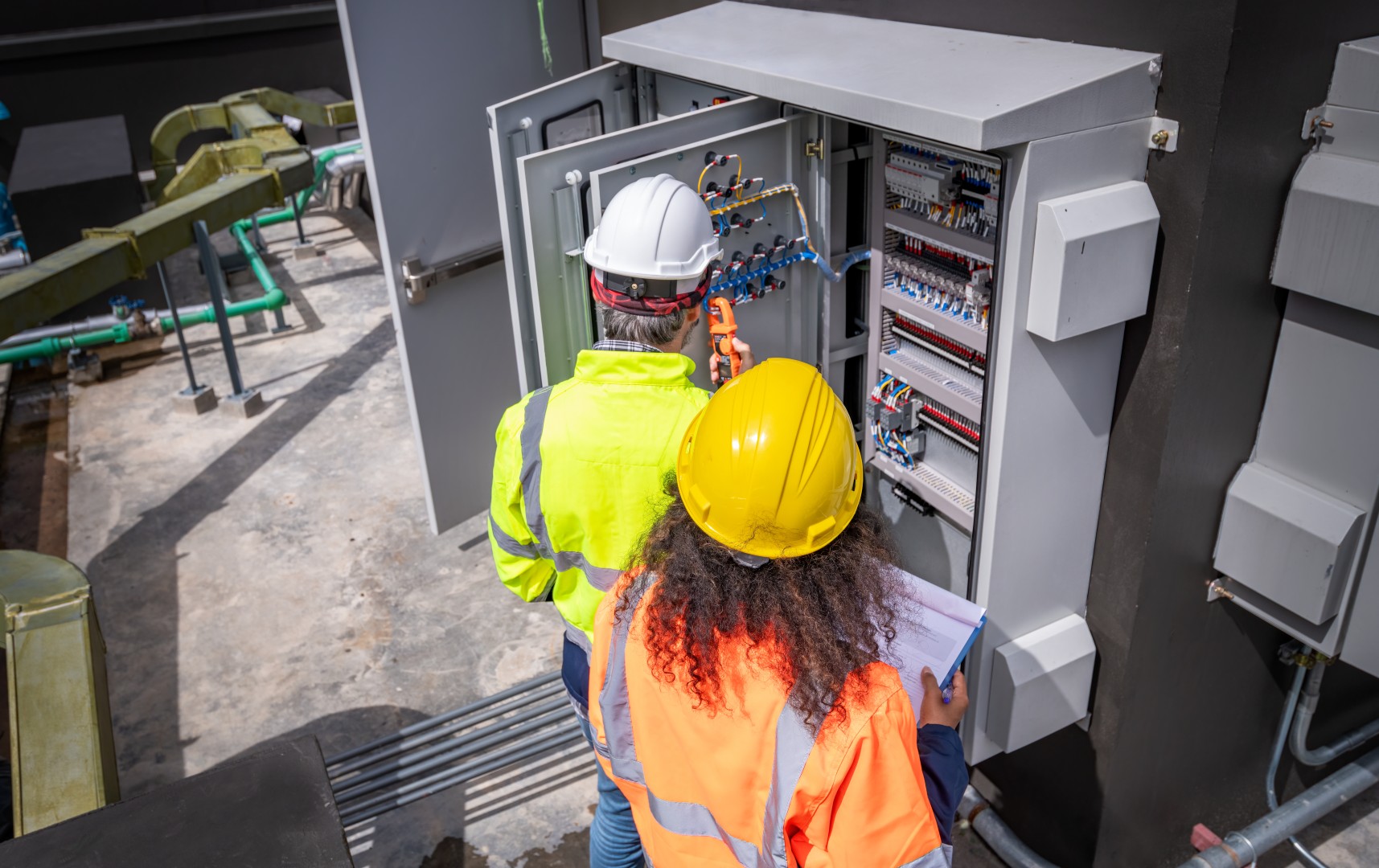
The labor shortage in this trade is not a forecast. It is here. Utilities are extending outage windows, deferring projects, and competing for the same shrinking pool of qualified protection and control technicians.
The relay technicians who commission your substations are getting older, and the bench behind them is thin. Every utility operations leader I talk to knows this. The workforce that built and maintained the grid through the last forty years is retiring faster than the industry is replacing it, and the work itself, protection and control, relay testing, and commissioning, is some of the hardest in the trade to learn. You cannot hire your way out of this problem. There are not enough qualified people to hire.
So we decided to build them.
Last year, Telex stood up a U.S. Department of Labor registered relay technician apprenticeship. We developed it ourselves. It is not part of a multi-employer plan, and it is not a logo we borrowed. It is a two-year program we wrote, staffed, and now run, with 17 apprentices currently working through it. I want to explain why we made that investment, why I believe apprenticeships are the only honest answer to the skilled labor gap, and where utilities hold a piece of this problem that only they can solve.
Why a Relay Technician Apprenticeship, and Why Build Our Own
Relay and protection work does not lend itself to a crash course. A technician has to understand protection philosophy, not just procedure. They have to read a scheme, question a result that does not make sense, and know when a passing test still deserves a second look. That judgment is built over years, on real systems, under supervision. It is not built in a classroom alone.
The standard industry answer is to send a less-experienced person into the field next to a senior technician and hope the knowledge transfers. Sometimes it does. Often, it transfers incompletely, inconsistently, and without any record of what was actually taught. When the senior technician retires, whatever lived only in their head leaves with them.
A registered apprenticeship fixes the structure of that handoff. Ours pairs paid on-the-job training with defined competencies and related technical instruction across the work we actually do: PT testing, microprocessor relay and breaker-failure schemes, metering, transducers, commissioning sequence, and job management. The progression is documented. The standard is the same for every apprentice, in every region, whether they are deployed in a union or non-union environment. That consistency is the point. “Telex-trained” is not a slogan when there is a curriculum behind it.
We built it ourselves because no off-the-shelf program covered protection and control the way our clients need it covered. Borrowing someone else’s framework would have meant training to a standard that was not ours. We would rather own the standard and be accountable for it.
The Hard Truth About the Skilled Labor Gap
The labor shortage in this trade is not a forecast. It is here. Utilities are extending outage windows, deferring projects, and competing for the same shrinking pool of qualified protection and control technicians, all while load growth from data centers and electrification is pushing more substation upgrades and new builds onto the schedule. Demand is climbing while the experienced workforce is leaving.
There is no version of this that gets solved by recruiting alone. Every firm in the space is fishing in the same pond. The only way the industry adds net new qualified technicians is to train them from the ground up, deliberately, safely, and at a scale that actually moves the number. Apprenticeship is the mechanism that does that. It is slower than hiring, and it is more expensive in the near term. It is also the only approach that produces a technician who can be trusted on a protection scheme five years from now.
That is why we are, plainly, big believers in apprenticeships. Not as a recruiting brochure, but as the load-bearing answer to a problem the whole industry shares. If firms like ours do not develop people, the gap does not hold steady. It widens.
The Part Utilities Control: Letting Apprentices on the System
Here is where I need to be direct, because this is the constraint that limits everything else.
The single biggest obstacle we face in developing relay technicians is not curriculum, funding, or instructors. It is getting clients to allow apprentices on their systems at all.
The reluctance is understandable. This is high-consequence work around energized and soon-to-be-energized equipment. A utility carries the risk of what happens in its yard, and “we’re training someone” is not always a reassuring phrase when a protection scheme is involved. Because of that, the default answer is often no apprentices on site, only fully qualified technicians.
I understand the instinct. I also think it is, collectively, a mistake the industry cannot afford. If every utility insists that only finished technicians touch their systems, the industry never produces the next generation of finished technicians. There is no other place for a protection and control apprentice to mature except on real systems, under real supervision. A simulator does not energize. A classroom does not have a live bus behind it. Field hours under a qualified journeyman are not just one input to building this skill. They are the input.
When a utility allows a supervised apprentice on its system, it is not taking on risk for someone else’s benefit. It is making a direct contribution to the pipeline that the same utility will be hiring from in five years. The technician who commissions your substation in 2031 is, right now, either getting supervised field hours somewhere or not getting them at all. If they are not getting those hours, they will not exist.
This does not mean unsupervised apprentices or relaxed safety. It means the opposite. At Telex, safety is treated as an engineering discipline, not a compliance line item. An apprentice on a Telex crew works under a qualified technician, inside the same stop-work culture and documented hazard controls we apply to all field execution. The apprentice does not lower the safety standard on the job. The structure exists precisely so that developing a technician and protecting the system are not in tension.
We have recently received the go-ahead to place apprentices on a major utility system, and we are working through similar arrangements with our labor partners to bring apprenticeship wage and training language into the agreements that govern where our people work. Every one of those approvals is a utility choosing to invest in the workforce it depends on. I would like to see more of them.
The Economic and Industry Case
The argument for allowing apprentices on systems is not only a workforce argument. It is an economic one, and it runs in the utility’s favor.
A trained technician developed through a structured apprenticeship is, over time, a more capable and more retainable technician. Telex runs a workforce of roughly 100 people, about 75 of them in the field, with an average of more than twelve years of experience, and we keep them. Apprenticeship is a meaningful reason why. People stay where they were developed, where there is a path, and where the standard they were held to is one they are proud of. For a utility, a contractor with low technician turnover means more consistent crews on your projects and less of the institutional-knowledge loss that drives rework and schedule risk.
There is a broader industry return as well. Apprenticeship spreads the cost of building the workforce across the firms willing to do it, and the benefit flows to every utility that hires from the resulting pool, including the ones that never hosted an apprentice. That free-rider dynamic is exactly why hosting matters. If only a few firms train, and only a few utilities allow training, the supply stays constricted and everyone competes harder for the same scarce technicians at rising cost. If hosting becomes normal, the pool grows and the cost pressure eases for the whole industry.
The math is not complicated. Training is an investment with a delay before the payoff. The alternative, not training, has no payoff at all, only a widening gap and a more expensive, more fragile labor market on the other side of it.
What I Am Asking
I am not asking utilities to take on risk they should not. I am asking operations and procurement leaders to treat a supervised apprentice on a qualified crew as what it is: a contribution to the pipeline you will be drawing from, made under the same safety discipline you already require, with documentation behind every step.
The grid does not forgive a shortage of qualified people any more than it forgives a protection error. We built our relay technician apprenticeship because the labor gap is real and recruiting will not close it. We can carry the training, the curriculum, and the accountability. The one thing we cannot manufacture is the field hours on real systems, and that is the part our utility partners control.
If your organization is willing to talk about how supervised apprentices can work safely on your system, that conversation is one of the most valuable ones we can have. It is how this industry keeps the lights on after the current generation of technicians retires.
About the Author
25+ years in the electrical industry. Experienced in Transmission (including EHV), Distribution, and Generation (including process control). Responsible for overall company direction and client relationships.